Self-Care Journal Prompts for Before, During and After Work


In this article
A self-care journal doesn't need a special notebook, a morning routine that starts at 5 a.m., or a page a day. For most working people, it is two or three minutes of writing at a few useful points in the day: before work starts, when something knocks you off balance, and when it is time to stop.
The National Institute of Mental Health includes "keep a journal" in its list of everyday ways to cope with stress, in its fact sheet on stress and anxiety. The research on structured writing is encouraging but modest. A 2025 systematic review of positive writing exercises in people without a mental health diagnosis looked at 51 studies and found the most consistent benefits for wellbeing and positive mood, with less consistent effects on stress and anxiety. Gratitude writing and "best possible self" exercises showed the most consistent results. The authors also rated the quality of the studies as poor or fair, so this is a habit worth trying, not a treatment.
The prompts below are grouped by when in the workday they are useful and what they are for. Pick one or two that fit. Nobody needs all of them.
A few ground rules first
Keep it short. Two to five minutes is plenty. A journal you abandon after a week because it takes twenty minutes does less than a few lines you write most days.
Write for nobody. No complete sentences required, no spelling, no audience. Bullet points count.
Keep it off work systems. As someone who has reported on remote work tools for years, I'd keep personal writing out of company laptops, work email and workplace chat. Those systems usually fall under your employer's IT policies. A paper notebook or a personal phone is a better home.
Give it an end point. Setting a timer for three or five minutes stops journaling from turning into another open-ended task, and makes it easier to start on days you don't feel like it.
Worth reading
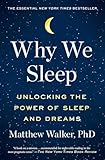
Why We Sleep
Matthew Walker
A sleep scientist on what sleep does for mood, memory and health, and why shift patterns and late nights cost so much.
Amazon pageAtomic Habits
James Clear
Small, repeatable changes and how to make them stick, without relying on willpower or a fresh start in January.
Amazon pageThe Upward Spiral
Alex Korb
A neuroscientist explains the small changes (sleep, movement, decisions, gratitude) that can shift a low mood.
Amazon page


Before work: setting up the day
Morning prompts are about deciding what matters before the inbox decides for you. Pick one from each group, or just one in total.
To get your bearings
- What is the one thing that would make today feel worthwhile, even if nothing else gets done?
- What is on my calendar that I'm uneasy about, and what is one small step that would make it smaller?
- What can I let slide today without real consequences?
To check in with yourself
- How much energy do I have this morning, honestly, and how should that change the plan?
- What does my body need before I sit down to work: food, water, a walk, five more minutes?
- What am I carrying from yesterday that I want to put down?
To set a boundary in advance
- What time am I stopping today, and what will I do to mark the end?
- Is there a meeting or request I want to say no to, and what would I say?
For hybrid workers, one more is worth adding on office days: what do I need to make today's commute and office time easier, and what can wait until a home day?
During the workday: one-minute resets
Midday prompts have to be fast, because the day is moving. These work on a sticky note, in a notebook kept beside the keyboard, or in a notes app on your own phone.
Before a hard conversation or meeting
- What do I want to say, in one sentence?
- What do I need to hear or find out?
- What would a good enough outcome look like?
After something knocks you off balance
- What just happened, in one line, without commentary?
- What am I feeling right now, in a word or two?
- What do I need in the next ten minutes?
Naming the event and the feeling separately is useful. "The client email made me feel stupid" mixes them together. "Client questioned the numbers. I feel embarrassed and defensive." gives you something to work with.
When the day is overflowing
- Write down everything in my head right now, as a list.
- Circle what truly has to happen today.
- Who could I ask for help, or tell that something will be late?
When the inner critic gets loud
- What would I say to a colleague who made this same mistake?
- Is this a problem with what I did, or a judgment about who I am?
- What is one kind, true thing I can say to myself about today?
These questions borrow from research on self-compassion, which treats being kind to yourself after a setback as a skill rather than an indulgence. Kristin Neff, the researcher most associated with the idea, sets it out for general readers in Self-Compassion (Amazon page).
After work: closing the day
The end of the workday is where a journal can do the most for people who work from home, because there is no commute to mark the change. A few lines can stand in for the drive home.
To close the loops
- What did I finish today, however small?
- Where did I leave the unfinished things, and what is the next step for each?
- What is the first task for tomorrow?
There is an interesting wrinkle here for anyone who writes at bedtime rather than at the end of the workday. In a small sleep study, researchers had young adults write for five minutes before bed, either a to-do list for the coming days or a list of tasks already completed. The to-do list group fell asleep faster, and the more specific the list, the faster they fell asleep. It was a single study of 57 healthy adults aged 18 to 30, but it suggests a sensible split: reflect on what you did at the end of the workday, and keep anything you write at bedtime focused on tomorrow's concrete tasks.
To notice what went right
- What are three things that went well today, and what part did I play in them?
- Who helped me today, and have I told them?
- What did I learn that I want to remember?
The first one is a version of the "three good things" exercise, one of the positive writing techniques covered in the review mentioned above.
To leave work at work
- What am I taking home in my head that can stay here?
- What is one thing I'm looking forward to this evening?
Once a week
Friday afternoon is a good time for a slightly longer entry. What went well this week? What drained me? What do I want to do differently next week? If you find that dread builds over the weekend, our guide to the Sunday scaries has a Friday and Sunday routine that pairs well with this.
Prompts for particular kinds of days
Some days need a specific question. The table collects a few.
| The kind of day | A prompt to try | Why it can help |
|---|---|---|
| Back-to-back video calls | When did I last look away from a screen, and when can I next? | Turns fatigue into a concrete break |
| A conflict with a colleague | What did they want, and what did I want? | Separates the issue from the person |
| Praise or a win | What exactly did I do well, and how can I do it again? | Makes good feedback stick |
| A mistake | What happened, what did I do about it, and what would I change? | Moves from blame to next steps |
| A week that is too full | What would I drop if I had to drop one thing? | Makes trade-offs visible |
| Feeling invisible on a remote team | Who did I actually talk to this week, beyond chat messages? | Shows where connection has thinned |
Making the habit last
Attach it to something you already do: first coffee, closing the laptop, the moment you sit on the train. Keep the notebook where you will see it. Expect to miss days, and pick it back up without making up for them.
Every month or so, skim back through what you wrote. Patterns are easier to see on paper than in memory. If the same meeting, person or day of the week keeps appearing as the low point, that is useful information, and it may be the start of a conversation with your manager. Some people pair a journal with a short, repeatable measure. Our WHO-5 wellbeing check takes about a minute and is scored out of 100, which makes it easy to track every couple of weeks alongside your notes.
Two things that can make it easier
Neither of these is necessary. A cheap notebook and your phone's timer will do the same job. They help some people because they remove a small bit of friction.
Workspace aids for a journaling habit
The Five Minute Journal
A guided journal with short morning and evening prompts. Easy to keep up during busy weeks.
Amazon pageTime Timer visual timer (8 inch)
A silent 60-minute timer whose red disc shrinks as time passes, handy for focus blocks and real breaks.
Amazon page
The Five Minute Journal (Amazon page) prints short morning and evening prompts on each page, which suits people who would rather not face a blank page. The Time Timer is a silent visual timer whose colored disc shrinks as time passes, useful for a three-minute writing session or for making a break actually happen.
How we chose these: each fits a specific problem described above (not knowing what to write, and not stopping), based on the makers' and publishers' descriptions and long-standing feedback from buyers. The book on self-compassion was chosen for its author's research background in the subject. This is not a hands-on review, and none of them is a substitute for support from a professional.
When writing isn't enough
Journaling is a way to notice and sort out what is going on. It is not therapy, and it can't fix a workload, a difficult manager or a health problem. If your entries keep circling the same heavy feelings, if writing about something leaves you more upset rather than less, or if low mood or worry is affecting your sleep and work most days, talk to a doctor or a licensed counselor. Your employer's employee assistance program is usually free and confidential, and it is often underused, a pattern we look at in why employees don't use the EAP. A journal can be a useful thing to bring to that first appointment.
If you are having thoughts of suicide or feel you might hurt yourself, call or text 988 to reach the 988 Suicide & Crisis Lifeline, available 24 hours a day in the US, or call 911 in an emergency.